Trump Vows Stunning Iran Will Pay for US Soldiers’ Deaths


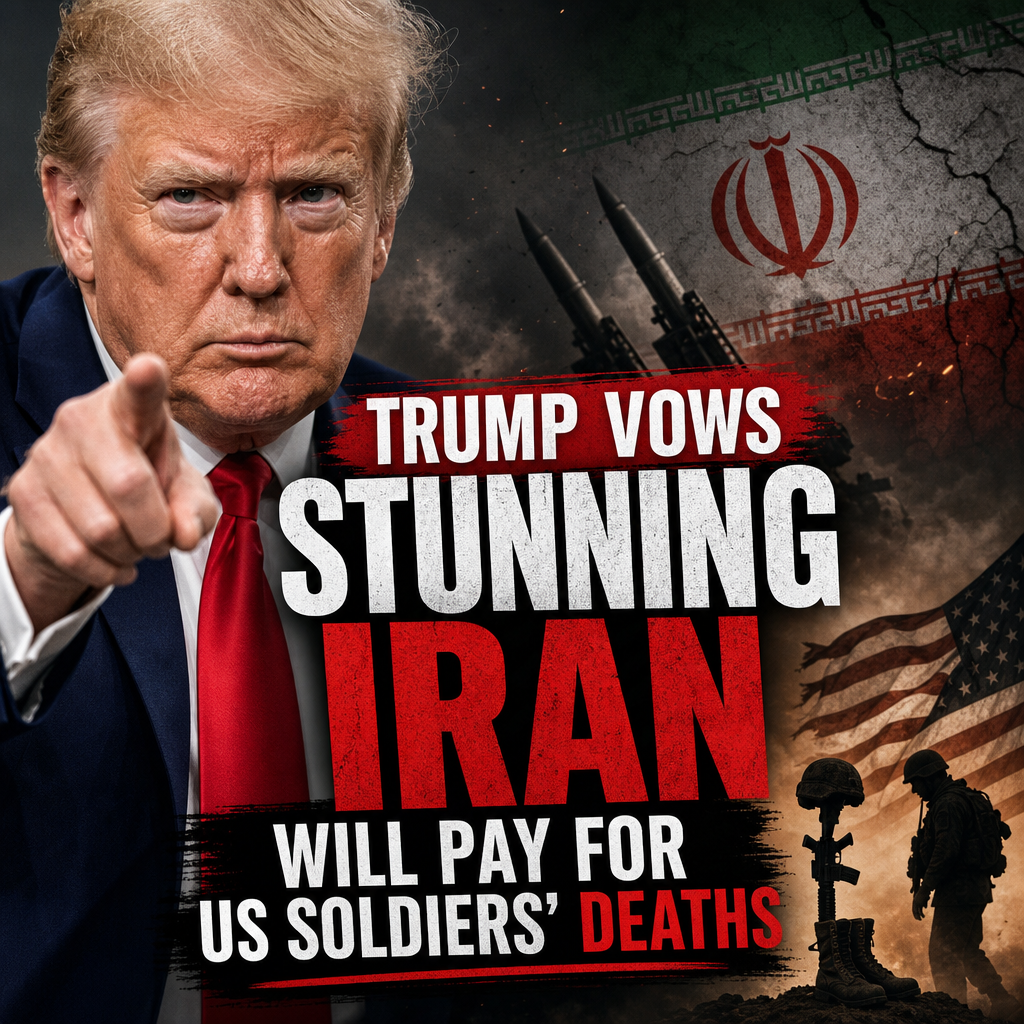
Trump vows Iran will pay has pushed the already tense debate over US-Iran relations into a more dangerous phase, raising fears that a single attack could widen into a broader regional confrontation. The statement, made after reports of American soldiers being killed, is politically potent, but it also leaves a lot unresolved: who exactly is responsible, how direct the evidence is, and whether Washington’s response will be limited, symbolic, or genuinely escalatory.
At the center of the story is a familiar but volatile pattern. When US forces are hit in the Middle East, presidents face pressure to respond quickly and forcefully. That pressure is especially intense when the White House frames the attack as the work of Iran or Iran-backed groups. But the public messaging matters almost as much as the military response. A vow that “Iran will pay” can reassure some Americans that the administration is taking the deaths seriously, while also signaling to Tehran and its allies that the next move could be severe.



Trump vows Iran will pay: what makes this moment so risky
The risk is not just rhetorical. Any retaliation against Iranian assets, commanders, or affiliated militias could trigger a chain reaction. Iran has long relied on a network of regional partners and proxies, while the US maintains forces and bases across the Middle East. That means even a limited strike can invite counterstrikes, deniable attacks, or pressure on shipping routes and energy infrastructure.
Different outlets tend to emphasize different parts of that equation. Coverage from Al Jazeera often places these incidents in the wider context of the region’s long-running security crisis, highlighting how quickly accusations and reprisals can spiral. Sky News coverage typically focuses on the immediate political and diplomatic consequences, especially the impact on US allies and on the likelihood of broader instability. RT, meanwhile, frequently frames such confrontations through the lens of US military overreach and the risks of Washington escalating tensions through force. Taken together, those perspectives point to one conclusion: the story is not just about revenge, but about whether retaliation would actually improve US security or make it worse.




There is also the question of evidence. In moments like this, administrations tend to speak with confidence before the full picture is publicly available. That does not mean they are wrong, but it does mean the public often hears the conclusion before the case. If the attack was carried out by a militia with Iranian backing, the distinction matters strategically, even if it does not matter politically. Direct blame on Iran itself implies a very different response than retaliation against a non-state group operating with Iranian support.
Why the evidence trail matters
Before any large-scale response, three questions usually matter most:
– Was Iran directly involved, or was the attack carried out by an allied militia acting on its own?
– Is there clear intelligence, or is the administration relying on circumstantial links?
– Would retaliation deter future attacks, or simply invite more?
Those questions are not academic. They shape whether the response is legally defensible, diplomatically sustainable, and militarily wise. They also affect how allies respond. European governments, Gulf states, and international organizations typically urge restraint when the possibility of escalation grows, even if they privately share concerns about Iranian influence in the region.
The politics behind the promise
There is a domestic political dimension as well. Strong language against Iran resonates with voters who see Tehran as a longstanding adversary and expect a hard line after American casualties. It also fits a broader campaign-style message of strength and resolve. But there is an unavoidable tension: the more forceful the rhetoric, the narrower the room for a measured off-ramp.
That tension has been visible in US policy for years. Previous administrations have alternated between sanctions, targeted strikes, diplomatic pressure, and sporadic attempts at negotiation. The result has been a cycle in which neither side fully trusts the other, but both remain aware that a direct war would be costly. For that reason, the phrase “Iran will pay” may be intended as deterrence, not necessarily as a literal promise of open conflict. Still, language can lock leaders into choices they may later wish they had avoided.
The broader Middle East context makes restraint harder, not easier. Any US strike could affect Iraq, Syria, Lebanon, the Red Sea, or the Gulf, depending on which actors are involved and how they respond. Civilian harm, shipping disruptions, and attacks on bases are all plausible downstream consequences. Even if the immediate response is limited, markets and regional governments would likely brace for further instability.
A fair reading of the situation
A balanced reading is that both sides have reasons to escalate and reasons to step back. Washington wants to protect its forces and show that killing Americans has consequences. Tehran wants to avoid a direct war with the United States while preserving enough leverage to deter pressure. That is why these confrontations often produce calibrated retaliation instead of all-out conflict.
The most responsible position, based on the available reporting and the broader pattern of US-Iran tensions, is to treat the president’s vow as a warning rather than a conclusion. It signals intent, but it does not yet tell us whether the next US step will be symbolic, targeted, or genuinely destabilizing. Much depends on the evidence presented, the military options chosen, and whether back-channel diplomacy can prevent the situation from spinning further out of control.
For now, the key takeaway is simple: this is not just another sharp exchange of threats. If the deaths of US soldiers are confirmed and linked to Iranian-backed actors, the demand for retaliation will be intense. But the cost of a poorly judged response could be far higher than the political benefit of sounding decisive.